
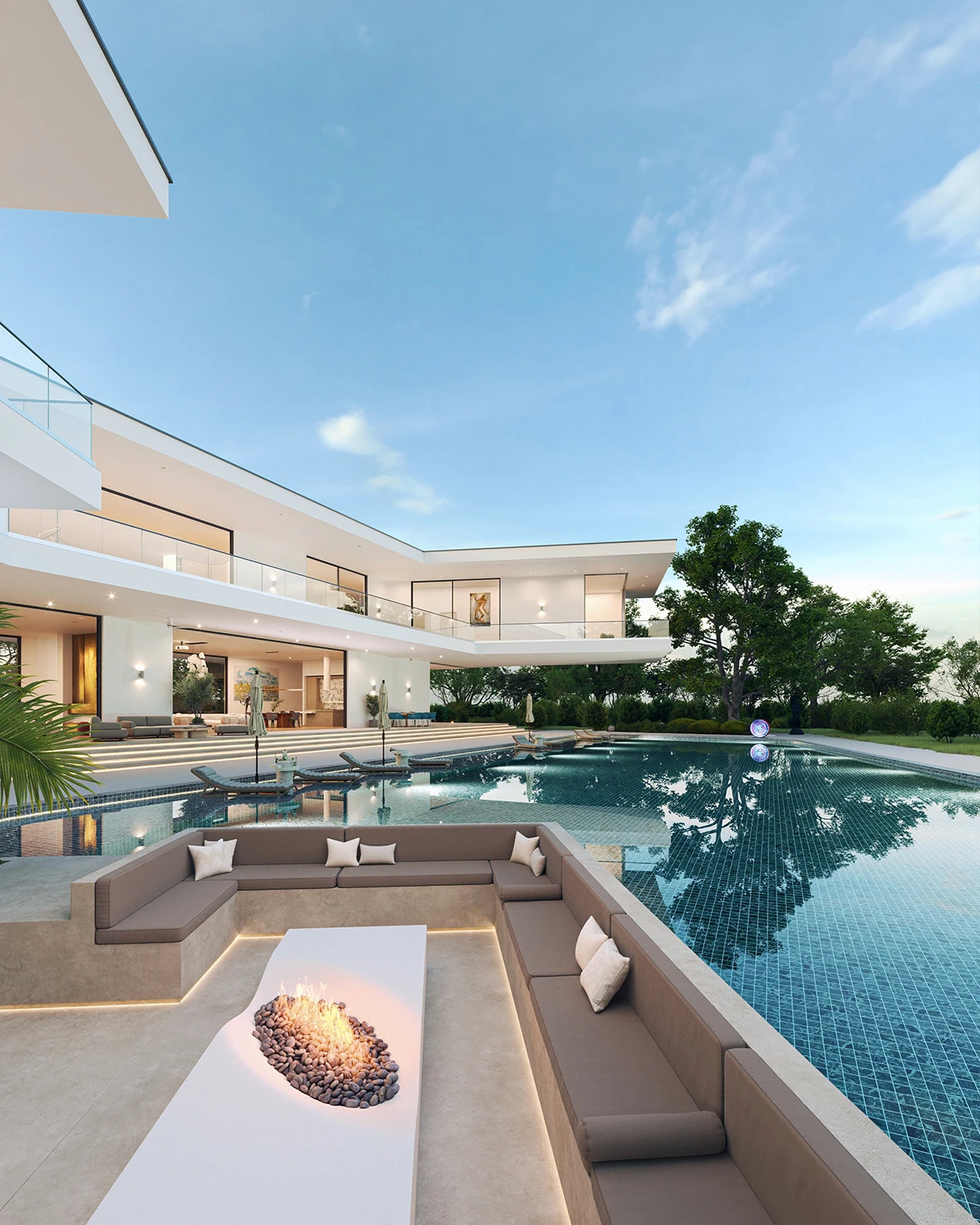
Luxury property marketing starts before the listing
A high-end project is rarely sold by square footage and a polished adjective list. Buyers, investors, and brokers need a convincing picture of the life, location, and design value being offered—often long before construction can provide photography.
That makes the early visual story part of the product. The website, investor deck, brochure, launch film, and sales-gallery material should not feel like separate campaigns. They should make the same promise and support it with the same architectural evidence.
Begin with the buyer’s unanswered questions
Before commissioning a long list of assets, define what a serious prospect still cannot understand. Is the value in the view, the privacy, the landscape, the plan, the material quality, the indoor-outdoor relationship, or the address? The strongest campaign gives those advantages a clear order.
This also prevents the common mistake of asking every render to say everything. A hero image earns attention. A supporting interior explains the experience. An aerial establishes location and scale. A film can reveal sequence. A 360° view helps when spatial relationships genuinely matter.
Build one visual system, not a folder of attractive images
Luxury positioning depends on consistency. Cameras, daylight, styling, planting, people, and color should feel as though they belong to the same project and audience. When every image chooses a different mood, the campaign starts to feel assembled rather than designed.
A useful visual set normally has hierarchy. One or two images carry the main promise; the rest answer specific questions. That makes it easier to adapt the work across a landing page, presentation, printed brochure, social crop, or sales screen without losing the core idea.
- Hero views: the clearest expression of the project’s value and character.
- Supporting views: rooms, amenities, landscape, arrival, and details that remove doubt.
- Aerial views: location, access, surroundings, outlook, and development scale.
- Motion and interactive media: sequence or exploration when stills cannot explain it efficiently.
Make pre-sales imagery specific enough to believe
Generic luxury signals are easy to recognize: a supercar, a champagne glass, a perfect sunset, and people dressed for a campaign that has no connection to the place. These devices can make very different developments look identical.
Specificity is more persuasive. Show the real view direction, the character of the neighborhood, the quality of the arrival, the relationship between inside and outside, and the materials that define the architecture. The more the image belongs to this project, the less it feels like a placeholder for any expensive property.
Match the asset to the moment in the sales journey
Someone discovering the project needs a different level of information from someone comparing floor plans or preparing to reserve. The campaign should move from attention to understanding, then from understanding to confidence.
At launch, a clear hero view and concise proposition may do most of the work. Deeper in the funnel, buyers benefit from supporting interiors, amenity views, aerial context, plans, specifications, and an easy way to ask a real person a specific question. More content is not automatically better; the right answer at the right moment is.
Common mistakes that make premium projects feel ordinary
Luxury marketing loses credibility when the words promise one level of care and the visuals show another. The problem may be inconsistent imagery, an over-styled scene, weak mobile presentation, slow media, or a campaign that talks about prestige without explaining the actual value.
- Leading with features before establishing a clear reason to care.
- Using the same stock language and visual clichés as competing developments.
- Commissioning formats because they look impressive rather than because they answer a buyer question.
- Treating mobile as a smaller desktop page instead of the first experience many buyers will have.
- Hiding the next step behind a vague contact form or several layers of navigation.
A better brief for luxury property visuals
The most useful brief does not begin with “we need six renders.” It begins with the audience, project stage, strongest value, unresolved questions, launch date, channels, and the action the campaign should make easier.
From there, the visual scope becomes much clearer. You can decide which views deserve the most attention, which supporting assets are genuinely useful, and where the same approved visual world can be adapted across the campaign.